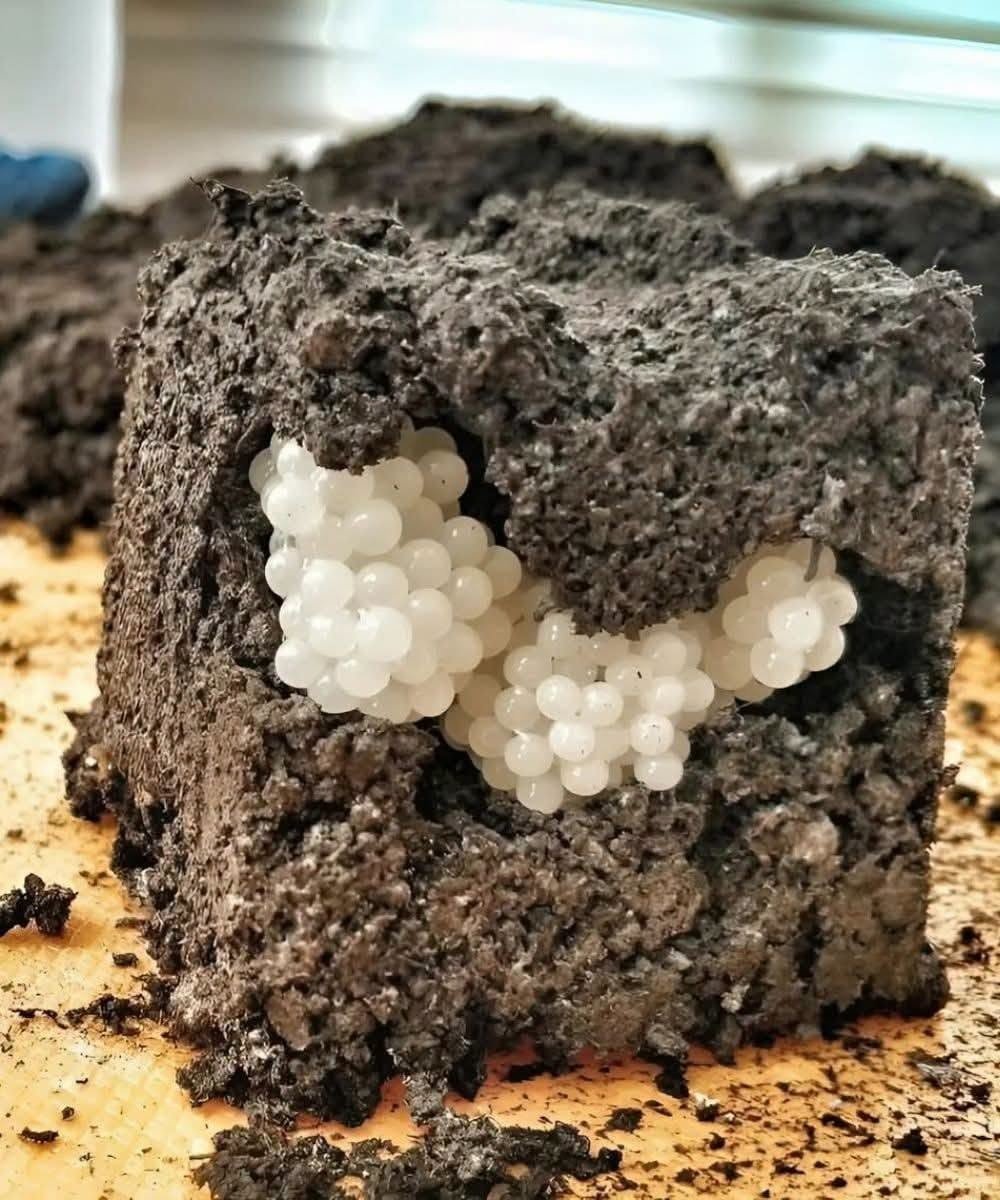
The discovery of those delicate white spheres shattered the illusion that her garden was a harmless refuge. Learning they were snail eggs, each cluster a quiet promise of chewed leaves and ruined seedlings, changed how she saw every glint in the soil. The thought that some species could even carry parasites capable of harming humans made the decision easier, but no less unsettling: they had to be destroyed.
She scalded the eggs with boiling water, then combed through pots, leaves, and damp corners, hunting for more hidden caches. It felt ruthless, yet strangely protective—of her plants, her space, and her peace of mind. Now, each time something pale and shiny catches her eye in the dirt, she doesn’t dismiss it. She kneels, looks closer, and remembers that even in the calmest garden, nature is quietly negotiating what lives, and what doesn’t.