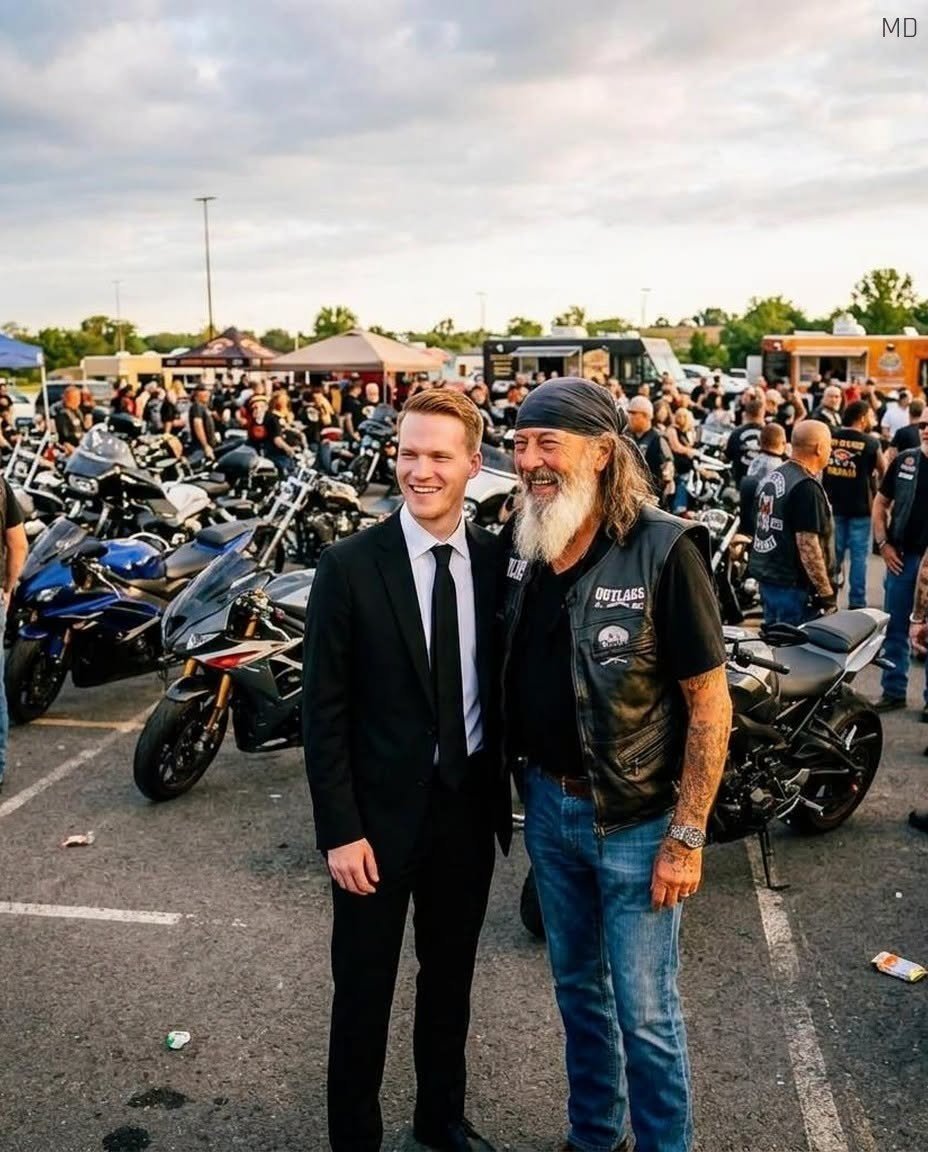
Fourteen-year-old David froze when a massive shadow stretched across the pavement behind the motorcycle shop. He had been searching a dumpster for food and expected an angry owner or police officer to order him away. Instead, a towering mechanic known as Big Mike placed a wrapped sandwich on the workbench beside him. The garage smelled of motor oil, heated steel, and coffee that had burned down to the bottom of the pot. Mike did not ask about the bruises beneath David’s sleeves or why he had nowhere to sleep. He simply pointed toward a toolbox and said anyone who ate in his shop also learned how to work. Before sunset, David was sorting wrenches, and for the first time in years, he felt safe.
Big Mike’s Custom Cycles stood in an aging industrial district the city often called blighted. Behind the repair area was a narrow room containing a worn sofa, clean blankets, canned food, and notebooks for teenagers with no stable home. David lived there while finishing high school, working evenings for $8 an hour and studying between repair jobs. Mike attended every school meeting, paid nearly $400 in college application fees, and later sold a restored motorcycle for $7,200 to cover David’s first semester. David eventually graduated from law school and joined a respected downtown firm. Yet whenever coworkers asked about Mike, David described him as a family friend, ashamed to admit that he had once slept behind a motorcycle garage.
Nearly fifteen years later, Big Mike received a city condemnation notice claiming the shop interfered with a major redevelopment project. The proposed payment barely covered the remaining $86,000 mortgage and ignored the value of his equipment, relocation costs, and decades of investment. Inspectors also described the back room as unauthorized housing rather than a refuge that had protected vulnerable teenagers. David gathered property records, photographs, repair receipts, and statements from dozens of former residents. Then he walked into the senior partners’ conference room and finally told them the truth about where he had come from. When he placed the city’s documents on the table, one partner noticed something hidden inside the valuation report—and suddenly, the case became much bigger than a building dispute.
The legal team discovered that developers had privately discussed purchasing the land months before the city declared it blighted. David filed zoning appeals, challenged the appraisal, and presented insurance records proving that Mike had maintained the property responsibly. In court, former teenagers testified that the shop had helped them become nurses, teachers, social workers, physicians, and business owners. The city’s attorney focused on missing permits, but David argued that a compliance plan could address those problems without destroying Mike’s livelihood, mortgage security, investment, or estate. The judge blocked the seizure and ordered the city to consider safer alternatives. A settlement later allowed the shop to remain open while adding fire protection, proper permits, and nonprofit oversight.
Months afterward, Mike caught a fifteen-year-old reaching for tools near the back door. Rather than call police, he placed a sandwich on the bench and asked the boy to sort sockets. David watched from the doorway in an expensive suit, his sleeves rolled up as grease darkened his hands. He no longer felt embarrassed by the place that had saved him. The law had protected Mike’s shop, but the shop had first shaped the attorney capable of defending it. Their family had never needed matching names or adoption papers; it began with food, work, patience, and one man’s decision not to turn away a frightened child.