The tailgate of Arthur’s truck dropped with a heavy metal clang that echoed across the gravel. He was already rolling the first of six bright blue industrial drums toward the barn door before I could set down my clipboard.
“What are those for, Arthur?” I asked, rubbing my left thumb against my palm.
“New blend of winter feed,” he said, not looking up as he tilted the heavy plastic drum onto its edge. “Got a discount on a bulk order from a distributor out of Savannah.”
I reached out to touch the smooth, unmarked plastic. There was no label, no ingredient list, not even a shipping manifest taped to the side.
“We have always used our own late-season honey for the winter feed,” I said. “Where is the paperwork on this?”
Arthur tapped his gold watch face twice, his eyes scanning the driveway. “Paperwork is in the truck. Trust me, Mabel, this is certified organic. No need to open them now, they are sealed tight for storage.”
He pushed the drum past me into the dark corner of the barn, leaving a faint, sweet smell in the air that did not belong to any flower I knew.
By noon, the autumn heat was climbing, and I was sitting at the kitchen table when the bell out front rang. Evelyn, my oldest friend in Sweetwater, came through the entryway, wrapping her knitted green shawl tightly around her shoulders despite the midday warmth.
She set a clear glass honey jar on the oilcloth table between us. It was one of our eighteen-dollar signature jars from the fresh batch, but the liquid inside looked pale and moved too quickly when she nudged it.
“Mabel, this did not help Thomas’s throat last night,” Evelyn said in her quiet, precise schoolteacher voice. “He was rasping until dawn.”
I unscrewed the lid and took a sniff. “It looks a bit pale, Evelyn. The late aster harvest is sometimes lighter.”
“It tastes like plain white sugar,” she said, her voice dropping lower. “It did not soothe him at all.”
I dipped a clean teaspoon into the jar, watching the liquid slide off the metal without leaving the usual thick coating.
I was still thinking about Evelyn’s visit when a shadow fell across the concrete floor of the bottling shed. My grandson David stood in the doorway, adjusting the brim of his blue baseball cap.
“Need some help around here, Grandma?” he asked.
“David,” I said, my heart lifting for a brief second before I saw the tight set of his jaw. “I thought you were busy up in Atlanta.”
“Had some free time,” he said, keeping his eyes on his boots. “I can wash jars, carry crates, whatever you need.”
He walked over to the stainless-steel holding tank and peered through the sight glass at the honey we had drained from the extractor that morning.
“This batch looks thin,” David said, pointing to the light, watery amber behind the glass.
“The bees must have found some late clover down by the creek,” I said, though I knew the creek pastures had been dry since August.
When Arthur’s sedan pulled back into the gravel driveway at half past five, I met him near the office steps.
“Arthur, the honey in the holding tank is too light,” I said, my thumb working against my palm again. “And Evelyn says the batch we bottled last week does not taste right.”
Arthur stopped, his car keys clinking in his hand. His face went tight, and his words came fast, the way he talked when he was pitching a new distributor in Macon.
“The weather changed the nectar flow, Mabel, it is as simple as that. We had that dry spell in September. You cannot expect every single jar to look like it came out of a textbook.”
He turned and walked toward the office, leaving me standing by the porch.
I walked back inside the empty bottling shed and picked up a wooden spoon, dipping it deep into the open vat.
“Something in this batch does not smell like clover, Arthur,” I murmured to the empty room.
I lifted the spoon high, watching the golden liquid run off the wooden spoon like water.
By nine the next morning, David, my grandson, was already sweeping the concrete floor behind the heavy steel bottling tanks.
The broom bristles made a dry, scraping hiss against the gray concrete as he worked his way toward the corner.
He stopped near the large blue recycling bin, bending down to retrieve a squashed plastic container with a yellow cap that had been wedged behind the plastic rim.
He held it up to the morning light filtering through the high windows.
“Does Arthur use this stuff to grease the conveyor belts?” David asked, turning the bottle over to read the sticky back label.
It was a thirty-two-ounce squeeze bottle of commercial corn syrup, the cheap kind with the blue label.
I glanced up from my ledger, resting my hands on the cool metal desk.
“He probably bought that for his lunch,” I said, leaning against the edge of the metal table. “Arthur loves sweet things on his biscuits, and he is always bringing fast food into the shed.”
David did not look convinced.
He adjusted the brim of his blue baseball cap, pulling it down slightly over his eyes.
“There are four more of these empty bottles in the bottom of the bin, Mabel,” he said.
“They are buried under the paper towels.”
I looked down at my hands, my thumb working against my palm again.
“Arthur has been working late shifts to get the autumn orders ready,” I said, though a cold spot started to form in my chest.
“He is likely eating his meals at the desk.”
David did not answer, stepping over to the stainless-steel vat instead.
He picked up a clean glass jar from the tray and held it under the flow valve, letting a golden stream fill the bottom half.
“The bubble should not move that fast, David,” I said, pointing to the liquid as it settled against the glass.
“What bubble?” he asked, turning the jar slowly in his hand.
“The one that forms when you tip it,” I said, coming over to stand beside him.
“A proper batch holds its breath before it lets the air through,” I whispered.
“It should take its time, like warm wax.”
He tipped the jar, and we both watched the air pocket slide effortlessly through the light amber liquid.
It did not linger.
It simply glided to the top as if it were passing through plain tap water.
By two o’clock, the afternoon heat was rising off the gravel driveway, and I was sitting on Evelyn’s screened porch with a glass of unsweetened iced tea.
The air was thick and still, carrying the faint, dusty scent of dry pine needles from the woods behind her pasture.
Evelyn, my closest friend, wrapped her knitted green shawl tightly around her shoulders despite the October warmth.
She sat very straight in her wicker chair, her gaze fixed on the empty birdfeeder hanging from the eave.
“Frank had a terrible night, Mabel,” she said, her voice dropping into that quiet, precise schoolteacher tone she used when things were at their worst.
“His breathing was so shallow around midnight that I had the telephone in my hand ready to dial the clinic.”
“Did the warm tea and honey not help his throat?” I asked, setting my glass down on the small metal side table.
“It made him wild,” she said, turning her face toward me.
Her eyes were rimmed with red, her pale skin looking translucent in the bright porch light.
“His blood sugar went up past three hundred within an hour of taking two spoonfuls,” she said.
“He was shaking so hard he could barely hold the sheets.”
My left thumb began to rub against my palm, a dull, familiar ache starting in the knuckle joint as my hand tightened.
“That has never happened with our honey, Evelyn,” I said, my voice barely louder than a whisper.
“We have the organic certification,” I added.
“It is pure clover, straight from the combs.”
“I know what your honey is supposed to be, Mabel,” she said, her fingers tightening on the edge of her green shawl.
“But I had to throw the rest of that new jar into the back of the pantry because it tasted like plain white sugar syrup.”
“It did not have the wild grass bite at the finish.”
“Give me the jar,” I said, standing up from the wicker chair.
“I want to take it back to the house and run some tests on it.”
She went inside and returned a moment later, holding the clear glass jar.
The Sweetwater Apiary label was slightly crooked on the glass, the gold borders looking cheap in the direct glare of the afternoon sun.
At four, I walked into the apiary office, where the small window looked out over the gravel lot and the old tractor barn.
The room smelled of old paper and the stale coffee Arthur kept in his thermos.
Arthur was sitting in the squeaking vinyl swivel chair, tapping his gold watch face with his index finger as he stared at a spreadsheet on his computer screen.
A stack of unpaid freight invoices sat near his right elbow.
“Arthur, I need the hive logs for the south pasture,” I said, closing the door firmly behind me.
“I want to see what the bees were pulling from during that dry week in September.”
“The logs are gone, Mabel,” he said without looking up from the monitor, his fingers clicking rapidly on the keyboard.
“I lost the black leather notebook in the field three days ago when the truck stalled by the creek.”
“You lost the notebook?” I asked, my voice rising.
“The one with five years of harvest records and our Queen breeding dates?”
“Things get misplaced when we are trying to run three hundred cases a week,” he said.
He finally turned his head to give me a quick, tight smile that did not reach his eyes.
“We do not have time to sit around writing down every little flower the bees visit,” he said.
“We have always kept the logs, Arthur,” I said, stepping closer to the desk.
“My husband kept them in the same drawer for thirty years,” I added.
“We need them if the organic inspector comes before the autumn festival.”
“The festival is on October fifteenth, Mabel, and we have eighteen thousand dollars’ worth of orders to fill before then,” he said, his voice rising into that rapid-fire corporate pitch.
“We have to keep moving if we want to secure the Atlanta accounts,” he said.
He turned back to his screen, his hand sliding over the stack of freight invoices as if to straighten them.
His fingers covered the top sheet, hiding the address at the top.
I left the office before he could start on his usual speech about our distribution margins and regional growth, my thumb still rubbing the side of my hand.
By seven, the sun had dropped below the ridge of Georgia pines, leaving the kitchen in a long, quiet shadow.
The refrigerator hummed in the corner, the only sound in the small house.
I set Evelyn’s jar on the clean laminate counter, the amber liquid inside looking thin and pale under the single overhead light bulb.
I picked up the glass container, holding it perfectly level for a long moment while the dust motes drifted through the warm air.
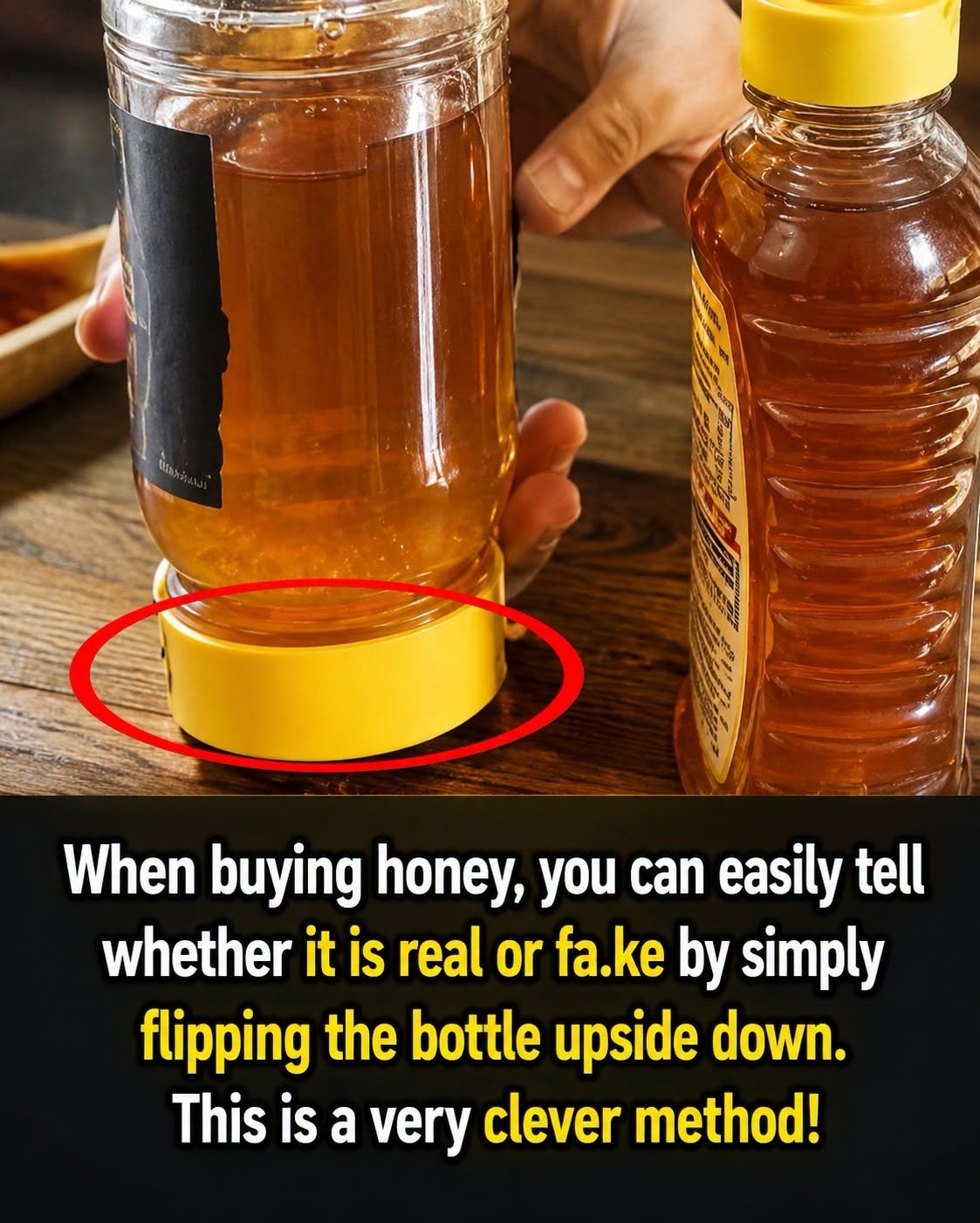
Then I flipped the jar completely upside down.
A single round bubble formed at the bottom and shot straight to the top without a single second of resistance.
The golden bubble hit the bottom of the jar with an unnatural pop.
The next morning at half past seven, the chill in the old tractor barn made my joints ache. David, my grandson, stood by the stainless steel boiling tank, his blue baseball cap pulled down low over his eyes. He pointed to the side of the tank where a small round gap showed bare threads in the metal.
The vintage brass thermometer was gone.
“It was here when we finished the summer bottling,” David said, his voice direct and short.
I reached out, my left thumb automatically rubbing the side of my hand to ease the quiet throb in my joint. The heavy brass instrument had been bolted to that tank since my late husband built the bottling line thirty years ago.
“We cannot monitor the liquefying temperature without it,” I said.
“The bracket did not break,” David said, touching the clean threads. “Someone unscrewed it.”
“We need to monitor the heating tank to keep the honey from scorching,” I said, my finger tracing the empty metal bracket. “If it gets above a hundred and forty degrees, the natural enzymes are destroyed.”
“The wiring on the heating coils looks new too,” David said, pointing to a gray electrical conduit running along the back of the tank. “Someone bypassed the manual thermostat entirely.”
“Why would anyone want to alter the heating process?” I asked.
David did not answer, his eyes fixed on the empty brass bracket.
“Could Arthur have taken it to be calibrated?” I asked.
“Arthur does not do calibration,” David said, adjusting his cap. “He does sales.”
He picked up a heavy wrench from the workbench and laid it in his toolbox with a sharp metallic clang.
“Let us check the back storage,” I said.
We walked past the empty wooden pallets where the summer harvest should have been stacked. The barn felt too large this morning, empty of the sweet, heavy scent of real comb.
“Where is the rest of the summer crop, Mabel?” David asked.
“Arthur said he moved it to the regional warehouse to save on local storage fees,” I said.
“Which warehouse?”
I realized then that I did not know. The paper trail was in Arthur’s locked desk.
“We need to find those records,” David said.
By eleven, the autumn sun had done little to warm the air on Evelyn’s front porch. Evelyn, my closest friend, wrapped her knitted green shawl tightly around her shoulders as she set two mugs of peppermint tea on the wicker table.
“The county health department called our house this morning, Mabel,” she said, her voice dropping to her quiet, schoolteacher tone.
I paused with my hand on the warm ceramic mug.
“An anonymous complaint,” Evelyn said. “Someone told them the Sweetwater Apiary honey is adulterated.”
My thumb pressed hard against my palm.
“We have had a clean organic certification for forty years,” I said. “Who would say such a thing?”
“The inspector is scheduled to come out before the autumn festival,” Evelyn said.
She looked at me, her eyes filled with a quiet concern that made my chest feel tight.
“If we lose our certification, we cannot sell at the festival on October fifteenth,” I said.
“They said they received a specific tip about the sugar content,” Evelyn said.
Our family name was the only currency we had left in Sweetwater.
“I need to test the batch we just bottled,” I said.
“I hope you find whatever is wrong before the inspector does,” Evelyn said.
She reached out and touched my arm, her fingers cold.
“Thomas is still coughing,” she added softly. “The honey did not help him at all last night.”
“He has been using three spoonfuls in his tea every evening,” Evelyn said, drawing the green shawl closer to her chest to block the damp draft. “But his breathing is shallower today, and his blood sugar has been erratic.”
“Pure clover honey should not cause a spike like that,” I said.
“I will bring you a different jar today,” I promised.
At two o’clock, the fluorescent lights of the Sweetwater Savings and Loan hummed overhead. Arthur, my business partner, sat across from me in the small glass-walled office, tapping his gold watch face.
“It is a standard signature, Mabel, just to extend the line of credit for the new distribution routes,” he said, pushing a three-page document across the desk.
I looked at the line that required my signature as co-owner.
“We have never needed an extension before, Arthur,” I said. “The autumn sales are supposed to be breaking records.”
“Logistics costs are up,” he said, his words coming in that rapid-fire corporate style. “We have to invest to scale. If we do not sign this by three today, the bank freezes our operating account.”
“The extension is for eleven thousand four hundred dollars,” Arthur said, his voice dropping to a low, urgent murmur. “It is just to cover the freight deposit for the Atlanta distributor.”
“I need to see the ledger first,” I said, sliding the papers back toward him.
“We do not have time for bookkeeping lessons, Mabel,” he said.
“Then I am not signing,” I said.
Arthur stopped tapping his watch, his face hardening as he pulled the document back.
“If the account freezes, we cannot pay David for his labor this week,” Arthur said.
“David will understand,” I said. “He knows we have to keep our books straight.”
“This is about survival, not paper-shuffling,” Arthur said, his voice rising enough to make the loan officer at the next desk look over.
“I will sign when I see the freight invoices and the hive logs,” I said.
He stared at me, his fingers tightening on the edge of the desk until his knuckles turned white.
“You are making a mistake,” he said.
I stood up, my knees aching from the long drive, and walked out into the bright afternoon heat.