
For millions of people who grew up watching television and movies during the 1990s, Jonathan Brandis remains one of the most recognizable young actors of his generation. With his youthful appearance, natural screen presence and increasingly prominent roles, Brandis experienced a level of fame that relatively few teenage performers ever reach. He went from commercials and television appearances to major movies and eventually became one of the defining teen stars associated with seaQuest DSV.
Yet his adult career proved much more difficult, and his life ended tragically in 2003 when he was only 27. Jonathan Gregory Brandis was born on April 13, 1976, in Danbury, Connecticut. He was the only child of Mary and Gregory Brandis. His connection to entertainment began extraordinarily early, long before he could have understood what becoming a professional performer meant. As a young child, he began modeling and appearing in commercial work, establishing a pattern of auditions, sets and professional expectations while most children his age were experiencing very different routines.
Brandis later reflected on the unusual discipline that came with working so young. Acting taught him that being on a professional set was different from ordinary childhood life. He learned that people expected him to arrive prepared and behave professionally even though he was still a child. Those early experiences introduced him to both success and rejection, two realities that would continue accompanying him throughout his career.
Television opportunities soon followed.
Brandis appeared as Kevin Buchanan on the daytime soap opera One Life to Live when he was still very young. As his acting opportunities increased, his family eventually relocated to Los Angeles, placing him closer to the center of the American film and television industry.
The move created more opportunities.
During the late 1980s, Brandis accumulated appearances on recognizable television programs, including The Wonder Years, Full House, Who’s the Boss?, L.A. Law and Webster. These roles varied in size, but together they gave him extensive professional experience before he had even entered his teenage years.
Then 1990 brought two projects that significantly increased his visibility.
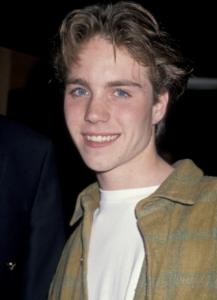
Brandis played Bastian Bux in The NeverEnding Story II: The Next Chapter, taking over the central role in the sequel to the popular fantasy film. The movie placed him at the center of a large-scale production and introduced him to a much wider audience.
That same year, he appeared in the television adaptation of Stephen King’s It.
Brandis portrayed the younger version of Bill Denbrough, one of the central characters confronting the terrifying entity at the heart of the story. The production became widely remembered by horror audiences, and Brandis’ performance remains one of the roles for which viewers continue to recognize him decades later.
His career continued growing.
In 1992, Brandis starred alongside comedian Rodney Dangerfield in Ladybugs. By this stage, he had developed from a child performer into a young leading actor capable of carrying significant portions of a movie.
But the role that transformed him into a genuine teenage phenomenon arrived the following year.
In 1993, Brandis joined the science-fiction television series seaQuest DSV as Lucas Wolenczak. The character was a highly intelligent young computer specialist aboard an advanced submarine in a futuristic world.
The series was associated with Steven Spielberg as an executive producer and received considerable attention when it debuted.
For Brandis, the impact was enormous.
Lucas Wolenczak gave teenage viewers a character who was intelligent, technically gifted and considerably younger than most of the adults around him. Brandis quickly became one of the show’s most popular cast members.
His popularity extended well beyond the television screen.
Teen magazines regularly featured his photographs and interviews. Fans placed his posters on bedroom walls, followed his appearances and sent enormous quantities of mail.
At the height of his popularity, Brandis reportedly received thousands of fan letters every week.

For a period during the 1990s, his face seemed almost unavoidable in publications aimed at teenage audiences.
Yet Brandis himself indicated that he had never planned to become a conventional teen idol.
He considered himself an actor first.
The attention from fans and magazines was something that developed around his acting career rather than something he had deliberately pursued. In interviews from that period, he spoke about the surprise of suddenly receiving enormous amounts of fan mail and becoming identified with the teen-heartthrob image.
His ambitions extended beyond being photographed for magazines.
Brandis wanted longevity.
He spoke about hoping to develop as an actor and eventually move into writing and directing. Rather than treating early fame as the final achievement, he imagined a career in which his work would mature as he grew older.
That transition would prove difficult.
Child and teenage performers often face a complicated professional challenge as they enter adulthood. Roles that once seemed naturally suited to them disappear, while casting directors begin evaluating them for an entirely different category of characters.
Brandis encountered that transition as the extraordinary attention surrounding his teenage years began fading.
seaQuest DSV underwent major creative and cast changes during its run and ended after three seasons.
Without the series providing a regular high-profile role, Brandis entered a period in which maintaining the momentum of his teenage career became increasingly difficult.
He continued acting.
His later credits included Outside Providence, Ang Lee’s Ride with the Devil and the war drama Hart’s War. These projects demonstrated that Brandis was still actively pursuing an adult acting career rather than simply disappearing after his teenage fame.
But the scale of his roles had changed.
One particularly painful professional disappointment involved Hart’s War, the 2002 film starring Bruce Willis and Colin Farrell.
Brandis had worked on the movie and reportedly hoped the project could provide meaningful exposure at an important stage of his career. Instead, much of his material was removed from the finished version. Accounts from people close to him have described that development as deeply disappointing.

For an actor attempting to reestablish momentum, having substantial work reduced before release could be especially difficult.
Still, Brandis continued working.
One of his final filmed projects was Puerto Vallarta Squeeze, an American-Mexican production directed by Arthur Allan Seidelman. The cast included Scott Glenn, Harvey Keitel, Craig Wasson and Giovanna Zacarías, with Brandis playing Neil Weatherford.
The film became part of the final chapter of his professional life.
People associated with Brandis continued to see talent in him, even as his career was going through a difficult period. That makes the end of his story especially painful because his professional future had not been conclusively written.
Brandis was still only in his twenties.
He still wanted to work.
He still had years in which a career could theoretically have changed direction again.
But those years never came.
In November 2003, Brandis died in Los Angeles at the age of 27. His death was ruled a suicide.
The news shocked people who remembered the smiling teenager whose face had once appeared throughout entertainment magazines.
No public image could fully explain what Brandis had been experiencing privately.
His parents later reflected on the period preceding his death.
His mother, Mary, recalled sensing that something was troubling her son when he spent time with his parents shortly before he died. The family understood that something was weighing on him, but they did not know the full extent of what he was experiencing.
His father, Gregory, later offered his own retrospective interpretation.
He said that when he looked back at Jonathan’s behavior during his twenties, he wondered whether his son may have experienced symptoms consistent with what was historically called manic depression, now generally known as bipolar disorder.
That statement requires an important distinction.
It was his father’s retrospective belief, not a publicly established medical diagnosis.
It would therefore be inaccurate to state as fact that Brandis had bipolar disorder unless supported by confirmed medical documentation.
Gregory Brandis also resisted reducing his son’s death to a simplistic story about Hollywood.
Although Jonathan had experienced professional disappointment, his father’s comments emphasized the importance of mental-health struggles and encouraged people who are suffering to seek assistance.
That nuance matters.
A person’s death cannot responsibly be attributed to a single rejected role, career setback or industry experience without sufficient evidence.
Human lives are more complicated than that.
Brandis’ death generated a powerful response among fans, particularly people who had grown up during the height of his fame.
For many, the news was difficult to reconcile with their memories.
They remembered Bastian from The NeverEnding Story II.
They remembered young Bill from It.
Most of all, many remembered Lucas Wolenczak from seaQuest DSV.
Those characters had become connected with a particular period of their childhood or adolescence.
Former colleagues and childhood friends also continued remembering Brandis years later.
Soleil Moon Frye, another performer who grew up in the entertainment industry, revisited parts of her youth while creating the documentary Kid 90. Among the material she discovered were old recordings and messages involving friends from that period, including Brandis.
Frye later spoke emotionally about hearing messages he had left years earlier.
For her, they were not recordings of a distant celebrity.
They were reminders of a real childhood friend.
That distinction is easy to lose when discussing former child stars.
The public sees performances, magazine covers and television interviews. Friends and relatives remember private conversations, ordinary jokes and personal moments that never belonged to the audience.
Jonathan Brandis lived within both worlds.
Professionally, his accomplishments before adulthood were substantial.
He had worked in television from childhood, appeared in recognizable films and eventually starred in a major network science-fiction series.
At an age when many aspiring actors are still waiting for their first meaningful opportunity, Brandis had already experienced international recognition.
But early success did not guarantee an easy adult career.
The entertainment industry frequently changes its expectations of performers as they age, and Brandis faced the difficult task of establishing an adult identity after audiences had become accustomed to seeing him as a teenage star.
He was attempting that transition when his life ended.
Looking back more than two decades later, it is tempting to describe his story entirely through tragedy.
Doing so would overlook much of the life that came before it.
Brandis was a working actor for most of his life.
He demonstrated ambition beyond celebrity and expressed interest in eventually writing and directing.
He also left performances that continue introducing him to viewers who were not even born during the height of his fame.
It remains widely remembered.
The NeverEnding Story II continues to be associated with the fantasy films of its era.
And seaQuest DSV still has viewers who remember Lucas as one of television’s memorable young science-fiction characters.
Those performances are part of Brandis’ legacy too.
His death is an important and heartbreaking part of his biography, but it should not become the only thing used to define him.Death & Tragedy
There is also a broader lesson in the contrast between his public success and private difficulties.
Celebrity does not provide reliable information about someone’s emotional well-being.
Professional achievement does not guarantee that a person feels secure.
And a smiling photograph on a magazine cover cannot reveal everything happening beyond the camera.
At the height of his fame, Brandis had thousands of fans following his career.
Years later, he faced professional uncertainty far removed from that earlier attention.
Neither period, by itself, tells the complete story of who he was.
His life contained early discipline, extraordinary success, creative ambition, professional disappointment, friendships and struggles that were not fully understood by the public.
That complexity deserves to remain intact.
Jonathan Brandis died at only 27, leaving behind understandable questions about what his career might have become.
Perhaps he would have found another breakthrough role.
Perhaps his ambitions to write and direct would have become increasingly important.
No one can responsibly know.
What is known is that his work left a lasting impression.
For viewers who discovered him in the 1990s, Brandis remains closely connected to a specific era of television and film.
For younger audiences encountering those projects today, his performances preserve something different: the work of a talented young actor whose career ended far earlier than anyone expected.
Remembering Jonathan Brandis therefore does not require romanticizing his struggles or speculating about circumstances that cannot be verified.
It means remembering the child performer who learned professional discipline extraordinarily early, the teenager who unexpectedly became an international heartthrob, and the young adult who was still trying to determine what the next phase of his career would look like.
His story also provides a reason to approach mental-health discussions with care.
People can experience serious distress without displaying it in ways everyone around them immediately recognizes.
Concern should be met with compassion rather than assumptions, and professional support can matter when someone is struggling.
More than two decades after his death, Jonathan Brandis continues to be remembered by former colleagues, friends and audiences who grew up with his work.
The enormous teenage fame eventually disappeared.
The magazine covers became artifacts of another era.
But the performances remained.
And behind those performances was not simply a 1990s heartthrob, but a young actor who spent almost his entire life working toward a creative future he tragically did not live long enough to complete.